Baby Breath Script Font for Elegant Digital Design
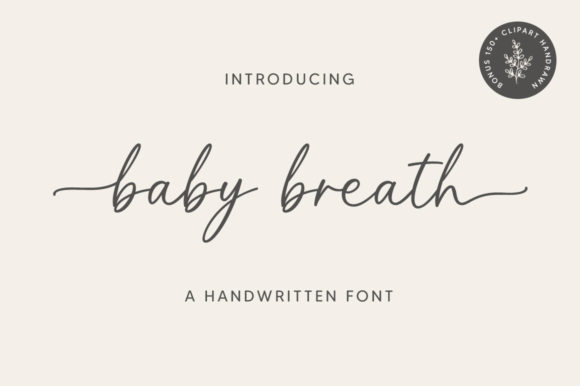
As a UI designer who ships high-conversion landing pages and brand-forward web experiences, I reach for Baby Breath when I need a Script Handwritten font that balances delicacy with digital clarity. Baby Breath is a thin lettered and graceful script font — not overly ornate, never fragile-looking on screen, and always unmistakably human. Its fine strokes and subtle bounce give it warmth without sacrificing legibility at 32px+ on hero banners or mobile headers. Because it’s PUA encoded, every swash, alternate glyph, and stylistic ligature loads reliably in modern browsers — no fallback surprises, no missing characters in Figma, Webflow, or Shopify custom fonts.
Baby Breath for Wedding Invitations and Elegant Branding
When designing for wedding planners, boutique studios, or luxury lifestyle brands, Baby Breath delivers instant tonal alignment: soft but intentional, romantic but refined. As a Script Handwritten typeface, it avoids the cliché of overused calligraphy fonts while retaining emotional resonance. Use it for email headers, RSVP buttons, or “Our Story” section titles — always paired with a neutral sans serif like Inter or Manrope for body text. On dark-mode sites or image overlays, set Baby Breath at 48–60px with 1.2 line-height and subtle letter-spacing (+20–40) to preserve airflow. It’s not meant for paragraphs — but as a Fonts choice for high-impact, short-form brand messaging? It converts trust faster than generic script alternatives.
Baby Breath in Hero Sections and Landing Page Headlines
Baby Breath is a thin lettered and graceful script font built for visual hierarchy — especially where you need contrast between voice and function. In SaaS or coaching landing pages, I use it exclusively for H1s like “Welcome to Your Calm Space” or “Design That Feels Like Home.” Its rhythm slows the eye just enough to land the message before the CTA button. Because it’s PUA encoded, I activate the descending swash on the final “y” or “e” to add motion without clutter. Tested across Chrome, Safari, and Edge, it renders crisply down to 36px on desktop and holds up well at 28px on iOS Safari — provided you avoid stacking it over busy backgrounds or low-contrast gradients.
Baby Breath for Online Store Banners and Product Launch Graphics
E-commerce designers know: banner typography must whisper aspiration while shouting availability. Baby Breath excels here — particularly for handmade goods, botanical skincare, or slow-fashion labels where Script Handwritten authenticity matters. Pair it with Montserrat Bold for “Limited Edition” subheads and use its swashes sparingly (only on primary product names like “Lavender Dream Serum”) to guide attention without slowing load time. Since this Fonts package includes full PUA encoding, you can trigger stylistic alternates via CSS font-feature-settings — no JavaScript required. For Shopify stores using custom @font-face kits, serve WOFF2 only; Baby Breath’s light weight compresses cleanly under 25KB.
Baby Breath in Portfolio Sites and Creative Brand Kits
If your portfolio lives on Webflow or Framer, Baby Breath becomes a signature element — not decoration. Its graceful proportions scale beautifully from desktop hero to tablet testimonials. I use it for client name accents (“Designed for Moon & Petal Studio”), project tags (“Editorial • Identity • Print”), and even subtle hover effects on case study cards (swash appears on :hover via CSS animation). As a Script Handwritten font, it signals craft without pretense — critical when positioning yourself as a premium digital creator. Just remember: always license Baby Breath for web embedding. The commercial license covers live sites, client projects, digital templates, and brand asset libraries — no per-page fees, no hidden restrictions.
Baby Breath for Blog Headers and Newsletter Subject Lines
Bloggers and content creators often overlook how much tone lives in typography. Baby Breath is a thin lettered and graceful script font that makes “How I Built My First Course” feel personal, not promotional. Use it for blog post titles in Ghost or WordPress (via custom CSS), but never for excerpt text — reserve it for 24–36px headline treatments only. In Mailchimp or ConvertKit, embed it as a web-safe fallback stack: font-family: 'Baby Breath', 'Segoe Script', cursive;. Its PUA encoding ensures swashes render in supported email clients (Apple Mail, Outlook for Mac), adding polish to subject lines like “You’re invited ✨” — where that single swashed “v” builds anticipation before the open.
Baby Breath Paired with Sans Serif Fonts for Clean UI Layouts
No Script Handwritten font thrives alone — and Baby Breath was designed for contrast. I pair it consistently with geometric sans serifs (Inter, Poppins) for form labels, navigation, and pricing tables. Why? Its thinness needs structural balance; its elegance needs functional grounding. In Figma design systems, I define Baby Breath as “Display / Accent” and lock body copy to a variable sans with optical sizing. Bonus tip: test readability on OLED screens — Baby Breath’s fine strokes hold up better than heavier scripts at small sizes, especially with system-wide font smoothing enabled. As a Fonts choice, it’s not “just pretty.” It’s purpose-built for layered, trustworthy digital identity.
Baby Breath for Mobile App Onboarding Screens and Splash Pages
Onboarding flows demand emotional clarity in under three seconds. Baby Breath works here because it’s graceful — not fussy — and thin lettered, which prevents visual crowding on small viewports. Use it for welcome headlines (“Hello, beautiful mind”) or value props (“Your calm, curated daily”), always at minimum 28px with generous padding. Avoid using swashes on primary CTAs — save them for decorative dividers or icon labels instead. Since it’s PUA encoded, you’ll have full control over character substitution across iOS and Android WebView environments. And yes — it’s fully licensed for embedded use in React Native and Flutter apps when delivered via approved webfont providers.